Masking is the performance of being someone you are not. Here is what it costs, and why so many neurodivergent people do not realize they are doing it.
.png)
What Is Masking: And Why It Exhausts You
You get home from a day that looked fine from the outside. You said the right things. You made eye contact at the right moments. You laughed when you were supposed to laugh. And now you are lying on the floor, or staring at the ceiling, or sitting in the dark, and you cannot explain to anyone, including yourself, why you feel like you have been running for eight hours straight.
That is masking.
The Definition Nobody Gives You
Masking is the process of suppressing, hiding, or replacing your natural responses with ones that are more socially acceptable. It is most commonly discussed in the context of autism and ADHD, but neither owns it. Anyone who has spent years learning that their authentic reactions are wrong, too much, too weird, too flat, too intense, has probably developed some version of it.
The clinical language is "camouflaging." The lived experience is more like method acting a character you did not audition for, in a play that never ends.
What Masking Actually Looks Like
Masking is not always dramatic. It is often invisible, even to the person doing it.
It looks like:
- Forcing eye contact because you know you are supposed to, even though it takes active concentration and makes it harder to process what someone is saying
- Suppressing the urge to stim, to rock, tap, fidget, or move, because you have learned that it makes people uncomfortable
- Mirroring other people's speech patterns, vocabulary, and humor so that you seem more like them
- Rehearsing conversations before they happen and replaying them after
- Performing emotions you do not feel, or hiding emotions you do, because the real ones are not the right shape for the situation
- Saying "I'm fine" so many times that you stop checking whether it is true
The exhaustion is not laziness. It is the cost of running a continuous translation layer between who you are and what the world expects.
Why So Many People Do Not Know They Are Doing It
Masking often begins in childhood, before you have the language to name it. You learn, through repetition and consequence, that certain responses get you punished or excluded. You adapt. By the time you are an adult, the adaptation is so automatic that it does not feel like a performance anymore, it feels like you.
This is one of the reasons late diagnosis is so common among autistic and ADHD adults, particularly women and people who were socialized to prioritize social harmony. The masking was so effective that it hid the underlying neurology, from teachers, from doctors, from family, and from the person themselves.
The question "why are you so tired all the time?" has no good answer when you do not know that you have been performing a character for thirty years.
The Cost
Essays like this, in your inbox
New writing on neurodivergent experience, dark fiction, and the book — no noise.
The research on masking is still developing, but what exists is consistent: masking is associated with significantly higher rates of anxiety, depression, and burnout. It is correlated with suicidal ideation in autistic adults at rates that should alarm anyone paying attention.
The mechanism is not complicated. Sustained performance is metabolically expensive. When the performance is your entire social existence, every interaction, every workplace, every family dinner, the cost compounds. There is no offstage.
Autistic burnout, which is distinct from general burnout, is often the endpoint of prolonged masking. It is characterized by a loss of skills and abilities that were previously functional, a collapse of the capacity to perform, and an exhaustion that does not resolve with rest. It can last months or years.
What Unmasking Is Not
Unmasking is not a switch you flip, and it is not a decision to "just be yourself" that resolves everything. For many people, the authentic self has been so thoroughly suppressed that they do not know what it looks like anymore. The process of finding it, if that is even the right frame, is slow, disorienting, and sometimes grief-laden.
You are not grieving a loss, exactly. You are grieving a version of yourself that was never allowed to exist.
Why This Matters for Fiction
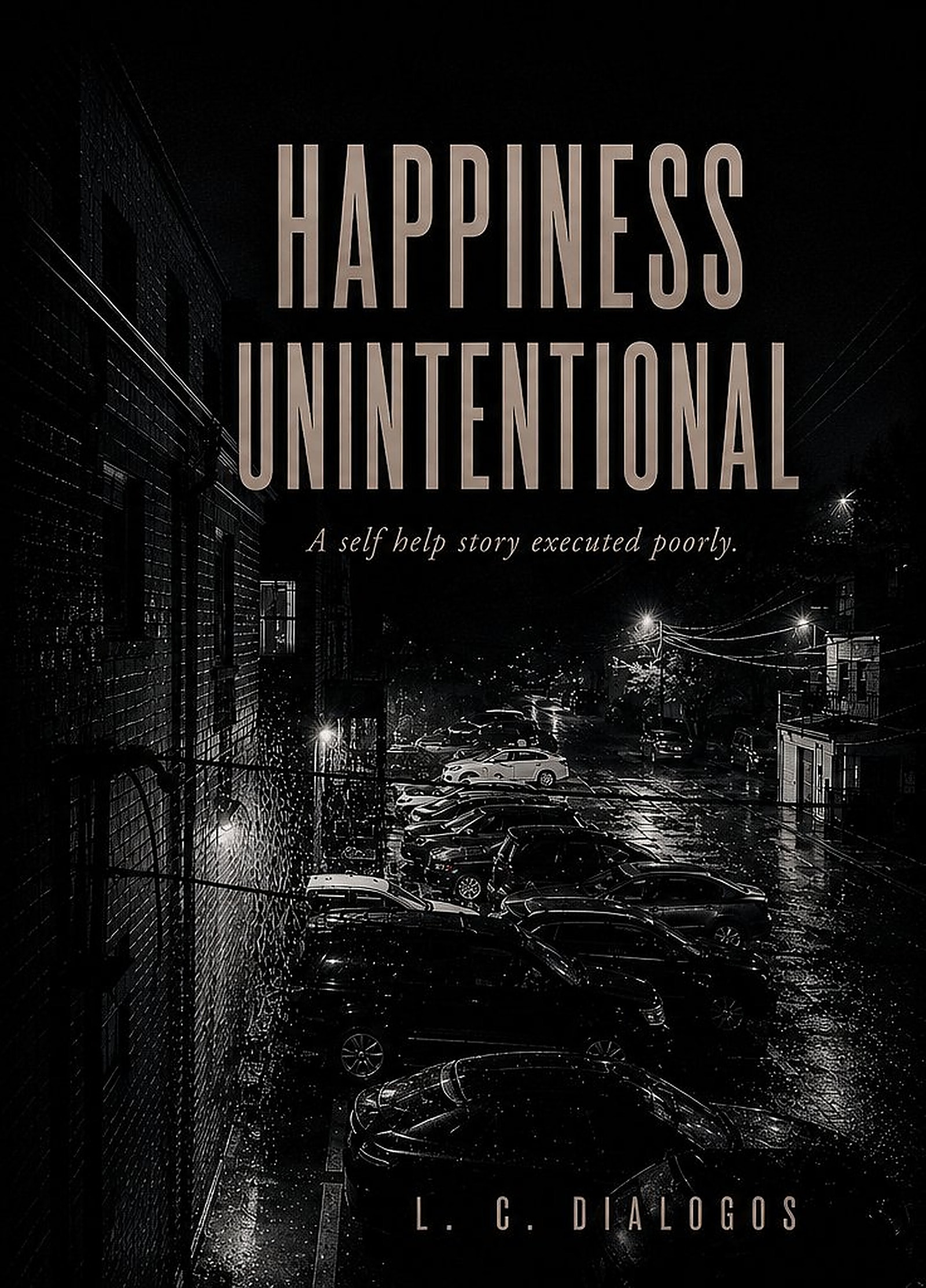
Happiness Unintentional is a novel about a man who has optimized himself into someone he does not recognize. The masking in the book is not framed as a neurodivergent experience, it is framed as a human one. But for readers who know what masking feels like from the inside, the recognition is immediate.
The novel does not offer solutions. It offers something rarer: the experience of being seen in the specific texture of the exhaustion. The particular quality of performing competence while something underneath is quietly collapsing.
If that sounds familiar, you are not alone. And you are not broken. You are tired in a way that makes complete sense.
The neurodivergent noir novel Happiness Unintentional is available now in print, ebook, and audiobook. If you are waiting for the Amazon launch, sign up to be notified.
Further reading from the Journal:
From the author's clinical writing: L. C. Dialogos is a novelist and licensed therapist.
Explore Topics
Written by
L. C. Dialogos
L. C. Dialogos writes dark psychological fiction exploring identity crisis, emotional numbness, and the anxiety of performing a self you're no longer sure exists. Influenced by Cronenberg, Lynch, and interdisciplinary frameworks spanning anthropology, neurology, and experimental literature. About the author →