Masking and passing are related but distinct. Understanding the difference matters: for how you understand your own experience, and for how you read fiction about it.
.png)
Masking vs. Passing: What Is the Difference?
These two words are often used interchangeably in conversations about neurodivergence. They are not the same thing. The distinction matters, for how you understand your own experience, for how you talk about it with others, and for how you read fiction that renders it.
Masking: The Process
Masking is an active, ongoing process. It is the suppression, modification, or replacement of natural responses with ones that are more socially acceptable. It is something you do, continuously, often automatically, often without full awareness that you are doing it.
Masking includes:
- Forcing or modulating eye contact
- Suppressing stimming behaviors
- Mirroring other people's speech patterns, vocabulary, and affect
- Rehearsing conversations before they happen
- Performing emotions you do not feel, or hiding emotions you do
- Monitoring your own behavior in real time and adjusting it to match social expectations
The key feature of masking is that it is effortful. Even when it has become automatic, even when you no longer consciously decide to do it, it consumes cognitive and emotional resources. The exhaustion that follows a day of masking is not metaphorical. It is the cost of running a continuous translation layer between who you are and what the world expects.
Passing: The Outcome
Passing is what happens when masking works. It is the state of being perceived as neurotypical, of successfully presenting as someone whose neurology is not visible to others.
Passing is an outcome, not a process. You can mask without passing (the performance is visible, or the effort is legible, or the context is one where the difference cannot be hidden). You can also, in some contexts, pass without actively masking, in environments that are well-suited to your neurology, or with people who are not looking for the difference.
The distinction matters because passing is often treated as the goal of masking. It is not, or it should not be. Passing has costs of its own.
The Cost of Passing
When you pass successfully, you become invisible in a specific way. The people around you do not know what you are managing. They do not make accommodations. They do not adjust their expectations. They treat you as someone who finds the social world as easy as they do, and when you struggle, they attribute it to personal failure rather than neurological difference.
Passing also makes it harder to ask for help. If you have been successfully performing neurotypicality for years, the request for accommodation can feel like a confession, like admitting that the performance was a lie, or that you have been deceiving people about who you are.
And passing requires sustained masking, which has its own costs: anxiety, burnout, the gradual erosion of access to your own authentic responses.
The Difference in Fiction
Essays like this, in your inbox
New writing on neurodivergent experience, dark fiction, and the book — no noise.
Fiction about masking and passing tends to conflate the two, or to treat passing as the goal. The character masks; the masking works; the character passes; the story is about whether the passing can be maintained.
The more interesting fiction is about the gap between masking and passing, about the effort that is invisible to everyone except the person doing it, about the cost of a performance that succeeds, about what is lost in the success.
Convenience Store Woman is, in part, about a character who has found a context where she can pass without the full cost of masking, and about the social pressure to perform normalcy in contexts where passing is impossible. The Remains of the Day is about a character whose masking has been so successful, for so long, that he has lost access to what he was masking. The passing was complete. The cost was everything.
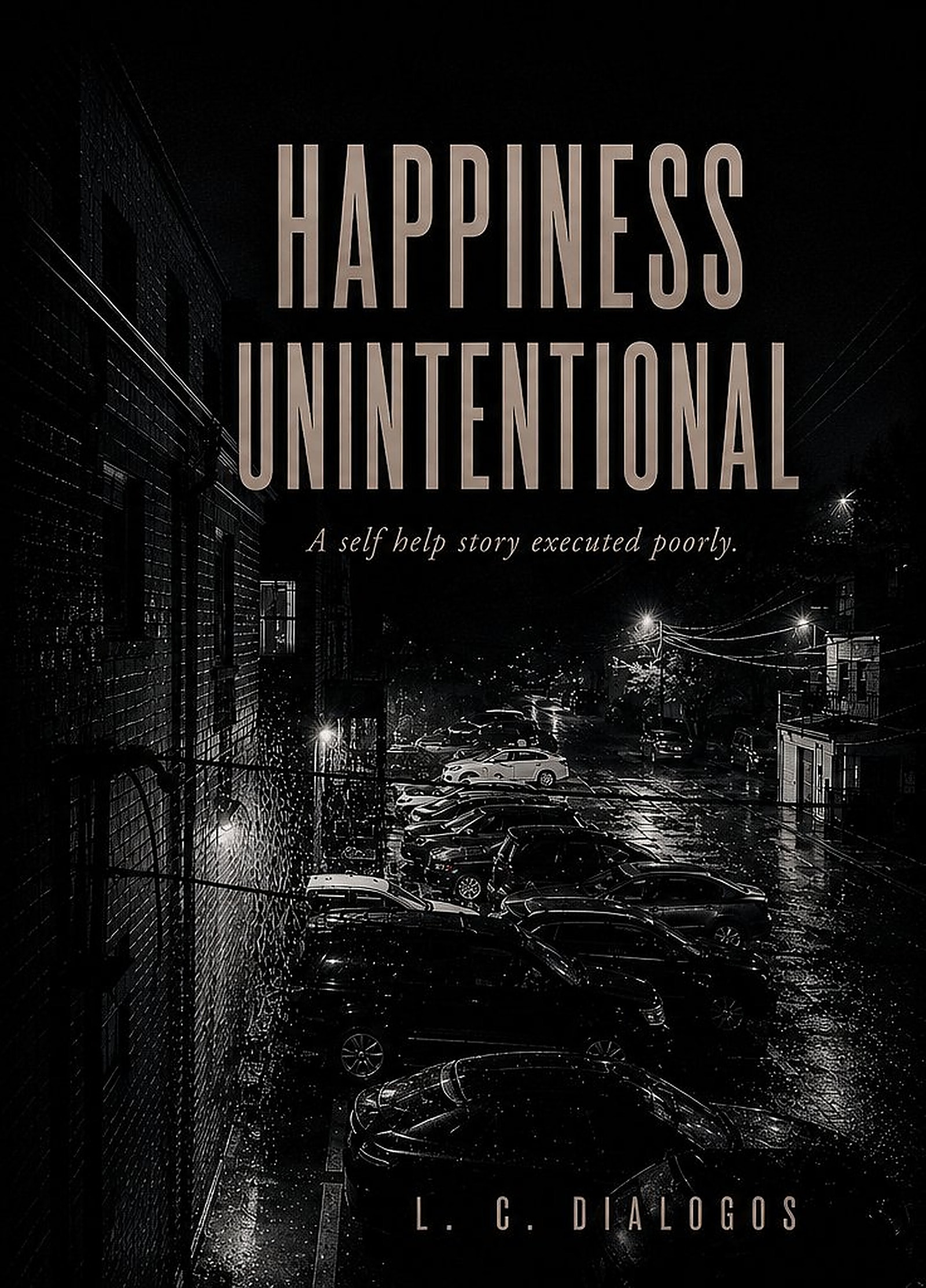
In Happiness Unintentional
The protagonist of my novel is a passer. He has been passing for so long that the masking has become invisible to him. He does not experience himself as performing. He experiences himself as being.
The novel is the story of what happens when the passing fails, not because the performance breaks down, but because the system that sustained it reaches its limit. The masking was always managing something it could not contain. The passing was always provisional.
For readers who have passed successfully for years and then experienced the specific collapse that comes when the system fails, the recognition tends to be immediate.
Read the opening pages of the neurodivergent noir novel Happiness Unintentional, or get the book in print, ebook, or audiobook.
Further reading from the Journal:
- What Is Masking, And Why It Exhausts You
- The Performance of Identity: When the Self Is a Strategy
- Autistic Burnout: What It Is and What It Isn't
Frequently asked questions
What is the difference between masking and passing? Masking is the active process of suppressing or modifying natural responses to appear more neurotypical. Passing is the outcome, being successfully perceived as neurotypical. You can mask without passing, and in some contexts you can pass without heavy active masking.
Is passing a good thing? Passing has real benefits, reduced discrimination, easier social navigation, access to opportunities that might otherwise be denied. But it also has costs: the sustained effort of masking, the invisibility that makes it harder to ask for accommodations, and the gradual erosion of access to authentic responses.
Why do neurodivergent people mask? Masking typically develops in response to social feedback, explicit or implicit messages that natural responses are wrong, too much, or unacceptable. It often begins in childhood, before the person has the language to name what they are doing. By adulthood, it can be so automatic that it no longer feels like a performance.
What is autistic burnout? Autistic burnout is a state of severe exhaustion resulting from sustained masking and social performance. It is distinct from general burnout and can involve a loss of previously functional skills and a collapse of the capacity to perform. It is often the endpoint of years of successful passing.
Explore Topics
Written by
L. C. Dialogos
L. C. Dialogos writes dark psychological fiction exploring identity crisis, emotional numbness, and the anxiety of performing a self you're no longer sure exists. Influenced by Cronenberg, Lynch, and interdisciplinary frameworks spanning anthropology, neurology, and experimental literature. About the author →