Alexithymia is not the absence of emotion. It is the absence of access. Here is what it is like to feel everything and understand none of it.
.png)
Alexithymia: When You Can't Name What You Feel
Someone asks how you are feeling. You pause. Not because you are deciding whether to be honest, but because you genuinely do not know. There is something happening in your body, a pressure, a weight, a kind of static, but the word for it is not available. You say "fine" or "tired" because those are the words that fit the shape of the silence.
This is alexithymia.
What the Word Means
Alexithymia comes from the Greek: a (without), lexis (word), thymos (emotion). Without words for emotion. It was coined in the 1970s by psychiatrist Peter Sifneos to describe a pattern he observed in patients who struggled to identify and describe their emotional states.
It is not a diagnosis. It is a trait, a dimension of experience that exists on a spectrum. Estimates suggest it affects roughly 10% of the general population, but rates are significantly higher among autistic people, with some studies placing it at 50% or above.
It is also, historically, one of the most misunderstood things a person can have.
What It Is Not
Alexithymia is not emotional numbness. It is not coldness. It is not sociopathy, though it has been confused with all three.
People with alexithymia feel emotions. The research is clear on this: the physiological responses are present. The heart rate changes. The cortisol spikes. The body is doing everything it is supposed to do.
What is absent, or impaired, is the cognitive processing layer that translates those physical states into named, understood emotions. The signal arrives but the decoder is not working.
The result is a person who may be in significant emotional distress without being able to identify it as distress. Who may be furious without recognizing it as anger. Who may be grieving without knowing that is what the weight in their chest is.
The Specific Texture of It
If you have alexithymia, you may recognize some of these:
- You know something is wrong but cannot say what. You describe it in physical terms: "my chest feels tight," "I feel heavy," "I'm tired but it's not sleep."
- You discover your emotional state retroactively, hours or days later, you realize you were upset about something that happened, but at the time you just felt vaguely off.
- You rely on context to infer your emotions. You know you should be happy at this event, so you perform happiness. You know this situation is sad, so you look for the sadness. Sometimes it is there. Sometimes it is not.
- Other people's emotional expressions feel like a foreign language you have studied but do not speak fluently. You understand the grammar but miss the idiom.
- You are accused of not caring about things you care about deeply, because the caring does not show up in the expected form.
Why It Matters for Relationships
Essays like this, in your inbox
New writing on neurodivergent experience, dark fiction, and the book — no noise.
Alexithymia creates a specific kind of relational difficulty that is often misread as indifference or emotional unavailability. Partners, friends, and family members may feel unseen or unimportant, not because the person with alexithymia does not care, but because the caring is not being communicated in a legible way.
This is compounded by the fact that many people with alexithymia do not know they have it. They have spent their lives assuming that everyone experiences emotions this way, that everyone has to work this hard to figure out what they are feeling, that everyone finds emotional conversations this exhausting.
The discovery that this is not universal can be disorienting. It can also be a relief.
Alexithymia and Neurodivergence
The overlap between alexithymia and autism is significant enough that some researchers have proposed they share underlying mechanisms, specifically, differences in interoception, the brain's ability to sense and interpret signals from the body.
Interoception is how you know you are hungry, cold, tired, or in pain. It is also, it turns out, how you know you are afraid or sad or in love. When interoception is atypical, as it often is in autistic people, the whole system of emotional self-knowledge becomes unreliable.
This is not a flaw in the architecture. It is a different architecture. But it has real consequences for how a person moves through a world that assumes emotional self-knowledge is universal and automatic.
In the Novel
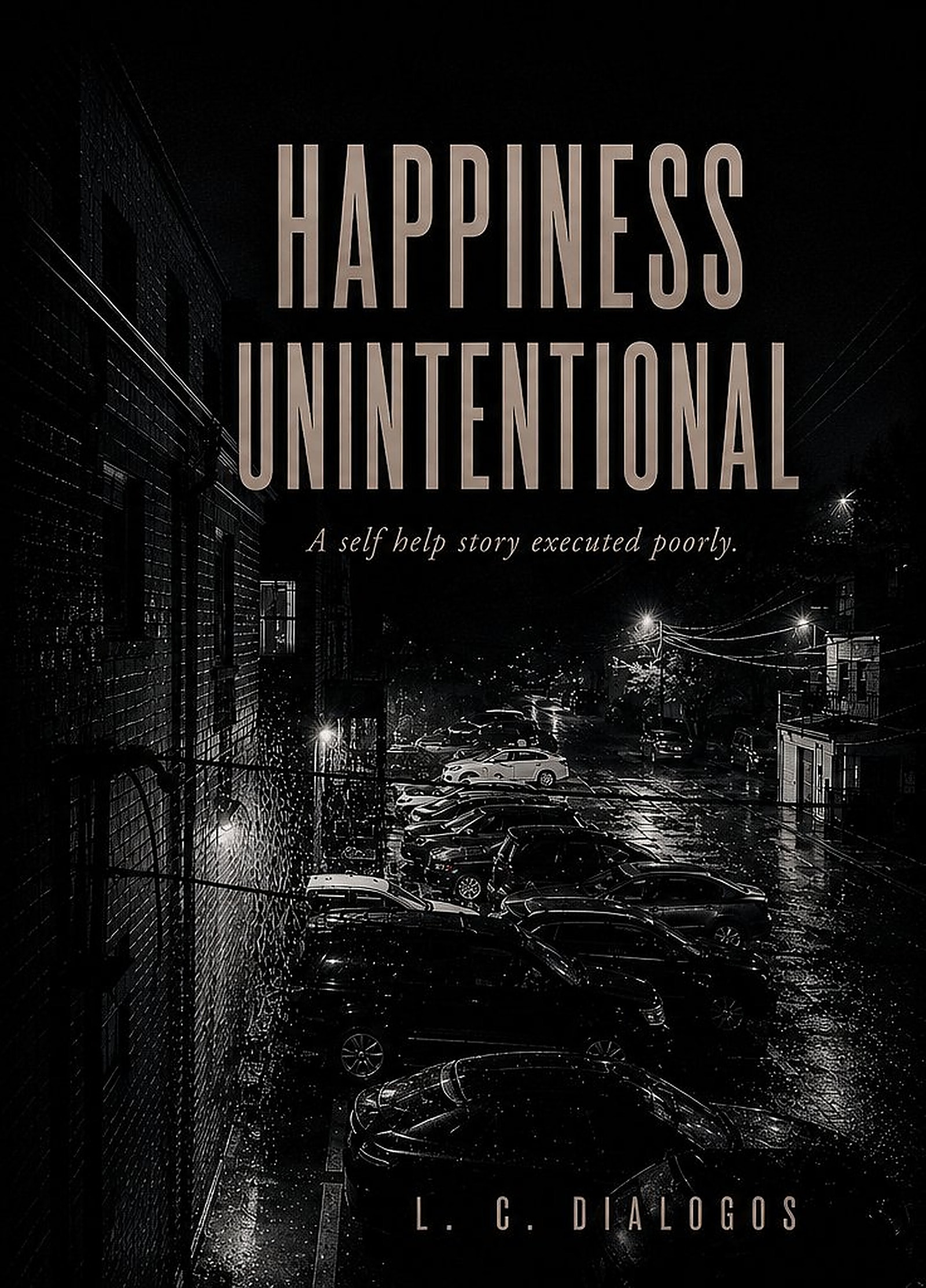
Happiness Unintentional does not use the word alexithymia. But the protagonist's relationship to his own emotional life, the way he tracks it through behavior and output rather than feeling, the way he optimizes around something he cannot name, is a portrait of it.
The novel is interested in what happens when a person who has always managed their inner life through systems and metrics reaches the edge of what systems can contain. What happens when the thing you cannot name becomes the thing that is destroying you.
For readers who have spent their lives translating their own emotional static, the recognition is not comfortable. But it is real.
Read an excerpt from Happiness Unintentional, or get the book in print, ebook, or Kindle.
Further reading from the Journal:
- What Is Masking, and Why Does It Exhaust You?
- The Difference Between Depression and Autistic Shutdown
- On Writing a Character Who Doesn't Know They're Suffering
From the author's clinical writing: L. C. Dialogos is a novelist and licensed therapist.
Explore Topics
Written by
L. C. Dialogos
L. C. Dialogos writes dark psychological fiction exploring identity crisis, emotional numbness, and the anxiety of performing a self you're no longer sure exists. Influenced by Cronenberg, Lynch, and interdisciplinary frameworks spanning anthropology, neurology, and experimental literature. About the author →