Late autism diagnosis is one of the most disorienting experiences an adult can have. These are the novels that render it with accuracy: and the ones that come closest without naming it.
.png)
Late Autism Diagnosis in Fiction: Books That Get It Right
A late autism diagnosis does not just tell you something new about yourself. It retroactively rewrites everything you thought you knew.
The years of exhaustion that you attributed to laziness or weakness, that was masking. The social failures you blamed on personal deficiency, that was a neurological difference nobody identified. The sense that you were performing a version of yourself that was not quite real, that was not a character flaw. It was a survival strategy.
The rewrite is disorienting. It is also, for many people, a real relief. And it is grief. All of these things at once.
Fiction has been slow to catch up to this experience. Most novels about autism are about childhood diagnosis, or about autistic characters who are known to be autistic from the start. The specific experience of late diagnosis, of being an adult who has spent decades not knowing, and then knowing, is underrepresented.
These are the books that come closest.
Books That Name It
The Electricity of Every Living Thing: Katherine May
This memoir-novel hybrid follows the author as she walks the South West Coast Path and, in parallel, comes to understand that she is autistic. It is one of the few books that renders the late-diagnosis experience directly: the retrospective recognition, the grief, the relief, the reorientation of an entire life.
May writes about the specific quality of autistic exhaustion, the way social interaction costs something that does not replenish in the ways it is supposed to, with precision and without sentimentality. This is not a book about overcoming. It is a book about understanding.
Unmasked: Ellie Middleton
A more recent entry, written by a young autistic and ADHD author who was diagnosed in adulthood. Middleton writes about the experience of late diagnosis with directness and humor, and about the specific disorientation of looking back at your life through a new lens.
Less literary than May, more conversational, but the emotional accuracy is high.
Books That Don't Name It But Render It
These novels do not feature late autism diagnosis as a plot element. But they render the experience of a person who has spent their life not knowing something fundamental about themselves, and the specific quality of that not-knowing, with unusual accuracy.
The Remains of the Day: Kazuo Ishiguro
Stevens has built his entire identity around a role. He has optimized himself for that role so completely that he has lost access to anything beneath it. When the role is no longer sufficient, when the world changes and the performance is no longer adequate, he has nothing to fall back on, because he has never developed a self outside the performance.
For late-diagnosed autistic adults, the resonance is structural. The experience of discovering, in middle age or later, that the person you thought you were was a very sophisticated adaptation, and that there is something underneath it that you have never had access to, is exactly what Ishiguro renders in Stevens.
Convenience Store Woman: Sayaka Murata
Keiko has found the one environment where she functions perfectly. She does not know why the rest of the world is so difficult. She does not have the framework to understand it. She has simply adapted, found a niche, built a life around it, and learned to perform normalcy well enough to avoid the worst of the social consequences.
Essays like this, in your inbox
New writing on neurodivergent experience, dark fiction, and the book — no noise.
The novel is, among other things, about what it is like to be a person who has never had the language for their own experience. Who has always known they were different without knowing why. Who has built a functional life around the difference without ever naming it.
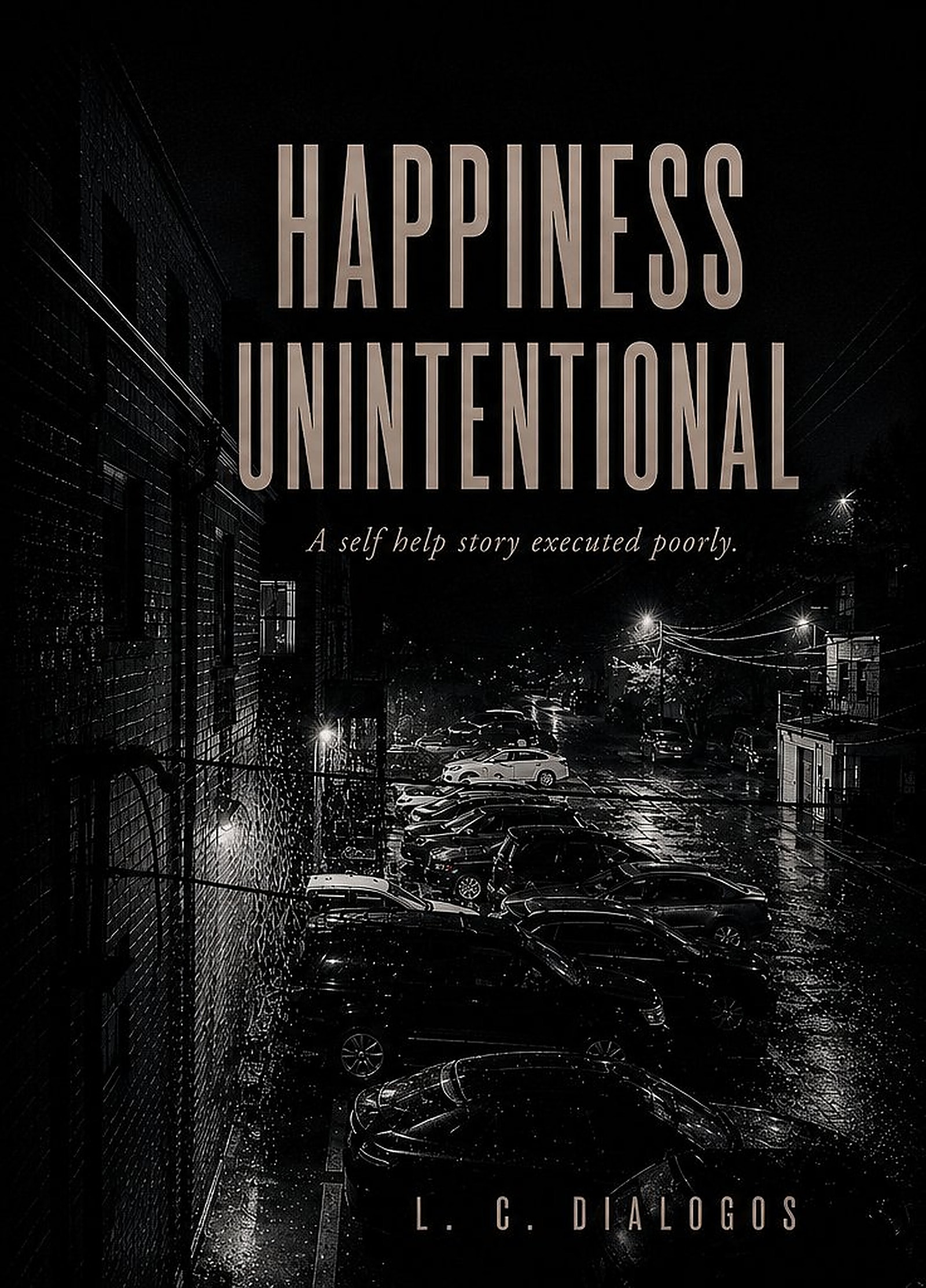
Happiness Unintentional: L. C. Dialogos
My own novel does not feature a late autism diagnosis. The protagonist does not receive one. But the architecture of his experience, the optimization, the performance, the specific quality of a person who has built an elaborate system to manage a self he cannot directly access, is drawn from the inside of that experience.
The novel is not about diagnosis. It is about what happens before diagnosis is possible: the years of not knowing, of performing, of building systems that work until they don't. For readers who have been through a late diagnosis, the recognition tends to be immediate.
What These Books Have in Common
The best fiction about late autism diagnosis, whether it names the diagnosis or not, shares certain qualities:
It renders the retrospective rewrite. The experience of looking back at your life and seeing it differently. The specific grief of understanding, too late, what was happening.
It does not pathologize. The difference is rendered as a difference, not as a deficiency. The difficulty is located in the mismatch between the person and the world, not in the person alone.
It takes the interior seriously. These are books about what it is like from the inside. Not what it looks like from the outside, not how it is explained to others, but the texture of the experience itself.
It does not resolve neatly. Late diagnosis does not fix anything. It reframes everything. The best fiction about this experience understands that reframing is not the same as resolution.
Read the opening pages of the neurodivergent noir novel Happiness Unintentional, or get the book in print, ebook, or audiobook.
Further reading from the Journal:
- What Is Masking, And Why It Exhausts You
- The Best Dark Fiction for Autistic Adults
- Why Neurodivergent People Are Drawn to Dark Fiction
Frequently asked questions
What is late autism diagnosis? Late autism diagnosis refers to receiving an autism diagnosis in adulthood, typically after years or decades of not knowing. It is increasingly common as diagnostic criteria have expanded and awareness has grown, particularly among women, non-binary people, and those who masked effectively in childhood.
Why is late autism diagnosis so disorienting? A late diagnosis retroactively rewrites your understanding of your own history. Experiences you attributed to personal failure, social difficulties, exhaustion, sensory overwhelm, are reframed as neurological differences. This reframing is often simultaneously a relief and a grief.
Are there novels specifically about late autism diagnosis? Very few. Most fiction about autism focuses on childhood diagnosis or on autistic characters who are known to be autistic from the start. Katherine May's The Electricity of Every Living Thing is one of the most direct treatments of the late-diagnosis experience. Several other novels render the experience without naming it.
What is masking in the context of autism? Masking is the process of suppressing or replacing natural autistic responses with more socially acceptable ones. It is common among autistic people who were not diagnosed in childhood, and it is one of the reasons late diagnosis is so common, the masking was effective enough to hide the underlying neurology from others and often from the person themselves.
Explore Topics
Written by
L. C. Dialogos
L. C. Dialogos writes dark psychological fiction exploring identity crisis, emotional numbness, and the anxiety of performing a self you're no longer sure exists. Influenced by Cronenberg, Lynch, and interdisciplinary frameworks spanning anthropology, neurology, and experimental literature. About the author →