Emotional numbness is not a problem to be solved. These novels sit inside the experience rather than rushing past it: and they are more useful than most advice.
.png)
Books About Emotional Numbness That Are Not Self-Help
The self-help section has a lot to say about emotional numbness. It will tell you to journal. To breathe. To reconnect with your body. To identify the underlying trauma. To practice gratitude. To feel your feelings.
This is not that.
This is a list of novels that sit inside the experience of emotional numbness rather than rushing past it. Books that understand that numbness is not a malfunction to be corrected. It is a response that made sense, and that the path through it, if there is one, is not a five-step program.
These are books for people who are tired of being told how to feel.
My Year of Rest and Relaxation: Ottessa Moshfegh
The narrator of this novel is trying to disappear. She has every external marker of a successful life, beauty, money, a prestigious job, a Manhattan apartment, and she finds all of it unbearable. She is not depressed in any way she can articulate. She is simply done.
The novel is not a cautionary tale. It does not resolve into recovery. It is a portrait of a person who has decided, at some level below conscious decision, that presence is too costly. The numbness is not a symptom. It is a strategy.
Moshfegh renders this without judgment and without sentimentality. The narrator is not sympathetic in the conventional sense. She is recognizable in a way that is more uncomfortable than sympathy.
The Remains of the Day: Kazuo Ishiguro
Stevens, the butler, has achieved a kind of emotional numbness through optimization. He has so thoroughly subordinated his inner life to his professional role that the inner life has become inaccessible. He does not feel things, or rather, he feels them at such a remove that they do not register as feelings.
The novel is the story of what this costs. Not in a dramatic way, there is no breakdown, no revelation, no catharsis. The cost is quieter and more devastating: a life that was lived at a distance from itself.
For readers who recognize the mechanism, who have used work, or performance, or optimization as a way of not having to be present to their own experience, the recognition is precise.
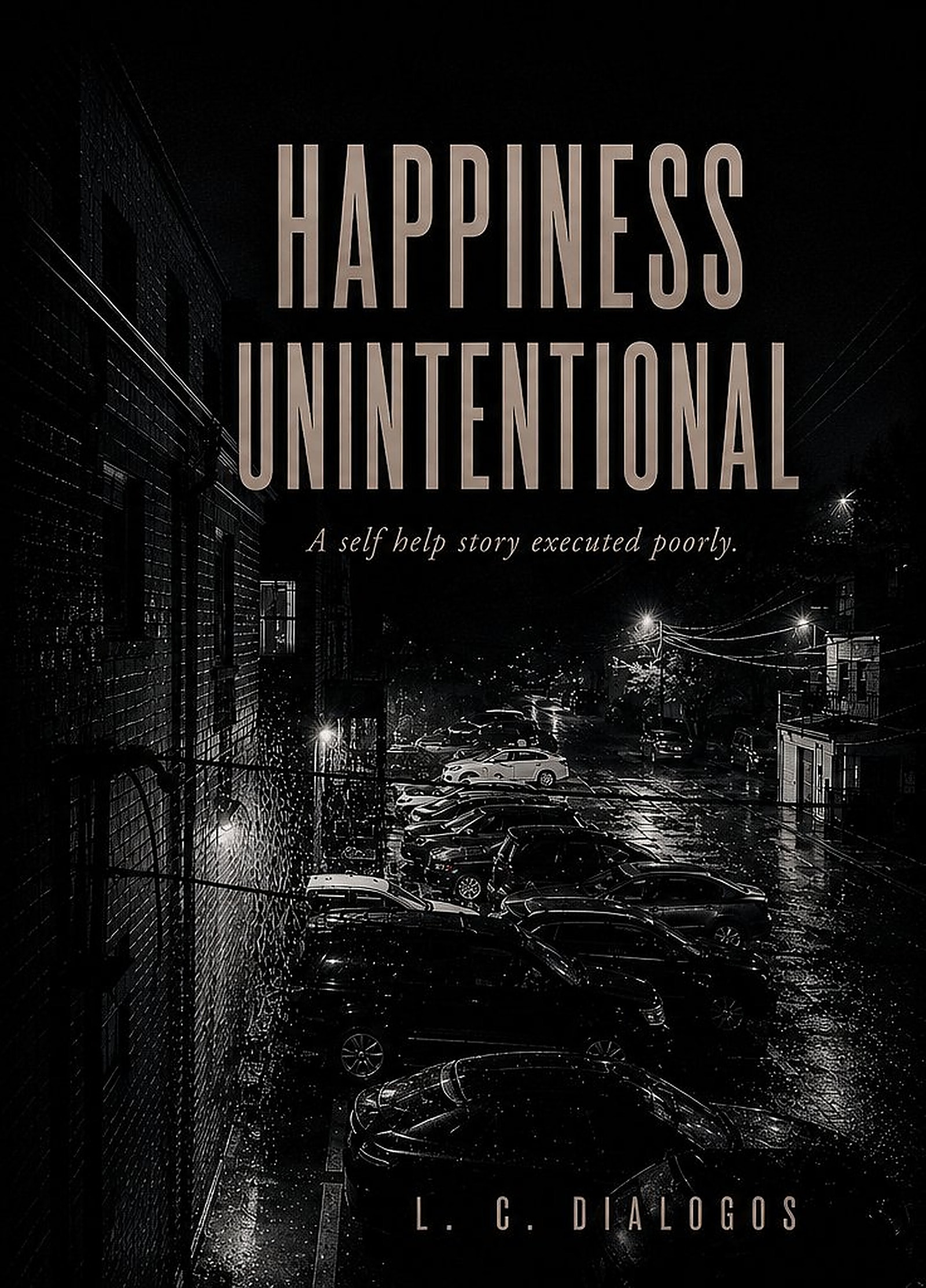
Happiness Unintentional: L. C. Dialogos
The protagonist of my novel has built a system for managing his life that is, in part, a system for managing his emotional experience. He does not feel things directly. He processes them through the system, through optimization, through performance, through the careful management of inputs and outputs.
The novel is the story of that system failing. Not because the protagonist has a breakthrough or a revelation, but because the system was always managing something it could not contain. The numbness was never the absence of feeling. It was the cost of containing it.
Readers compare it to: My Year of Rest and Relaxation (Moshfegh), The Remains of the Day (Ishiguro), Never Let Me Go (Ishiguro).
Read the first chapter free →, no sign-up. Or get the book in print, ebook, or audiobook.
Essays like this, in your inbox
New writing on neurodivergent experience, dark fiction, and the book — no noise.
Never Let Me Go: Kazuo Ishiguro
Kathy, the narrator, describes her life with a flatness that is both protective and devastating. She has learned, at some level, that her feelings do not change anything. The circumstances of her life are fixed. The emotional response to those circumstances is real but irrelevant.
The numbness in this novel is not pathological. It is adaptive. It is what you develop when you live in a world that has decided your inner life does not fully count.
The Bell Jar: Sylvia Plath
Esther Greenwood's breakdown is, in part, a breakdown of the performance of feeling. She has been performing the right emotions, enthusiasm, ambition, gratitude, desire, for so long that the machinery has seized. What is left is a flatness that she cannot explain and that the people around her cannot understand.
Plath renders the specific quality of this numbness with accuracy: the way it coexists with intelligence and perception, the way it is invisible from the outside, the way it is not the absence of a self but the exhaustion of one.
Stoner: John Williams
William Stoner's life is, by most external measures, a failure. His marriage is a disaster. His career is unremarkable. His one great love is thwarted. And yet the novel is not a tragedy in the conventional sense, because Stoner himself is not destroyed by these things. He is numbed by them, gradually, incrementally, in ways that are so quiet they are almost invisible.
Williams renders this with extraordinary precision. The numbness in Stoner is not dramatic. It is the slow accumulation of small surrenders. It is what happens when a person stops expecting the world to meet them.
Read the opening pages of the dark psychological novel Happiness Unintentional, no sign-up. Or get the book in print, ebook, or audiobook.
Further reading from the Journal:
- Books That Understand Dissociation Better Than Any Diagnosis
- The Difference Between Depression and Autistic Shutdown
- On Writing a Character Who Doesn't Know They Are Suffering
Frequently asked questions
What is emotional numbness? Emotional numbness is a state in which feelings are present but inaccessible or muted, a protective response to overwhelm, trauma, or sustained stress. It is distinct from alexithymia (difficulty naming emotions) and from depression, though it can coexist with both.
Why do some people prefer fiction over self-help for emotional numbness? Self-help typically frames emotional numbness as a problem to be solved and offers strategies for resolution. Fiction can sit inside the experience without rushing past it, rendering the texture of numbness with accuracy, offering company rather than advice. For many people, being seen in the experience is more useful than being told how to exit it.
Is emotional numbness the same as depression? Not exactly. Emotional numbness can be a symptom of depression, but it can also occur independently, as a response to trauma, burnout, or sustained masking. Depression typically involves a pervasive low mood; emotional numbness can coexist with a relatively stable mood while still involving a significant disconnection from one's own emotional experience.
Explore Topics
Written by
L. C. Dialogos
L. C. Dialogos writes dark psychological fiction exploring identity crisis, emotional numbness, and the anxiety of performing a self you're no longer sure exists. Influenced by Cronenberg, Lynch, and interdisciplinary frameworks spanning anthropology, neurology, and experimental literature. About the author →