Every family that cuts someone off needs a story. The story is not about what happened. It is about who the person is. This is how the villain gets written.
A client describes, in one of our early sessions, the strange experience of being estranged from a sibling and discovering, months later, that an entire story had been written about her in her absence. She hadn't been consulted. She hadn't even known the story existed until pieces of it started reaching her secondhand: a diagnosis she'd disclosed years earlier, in confidence, now circulating as the explanation for why the family had needed to protect itself from her. Unstable. Needs to be seen. The story had a clean shape: a family doing its best, forced into painful but necessary distance from a member whose illness made closeness untenable.
She hadn't done the things the story implied. She'd raised concerns the family didn't want raised. But estrangement, once it happens, tends not to stay silent, and silence was never really the option the family was choosing between. The real choice was between two available stories: we distanced ourselves from someone who was harming us , or we distanced ourselves from someone who was naming something true and inconvenient . Only one of those stories lets the people who did the distancing keep their reputation intact. It is not a coincidence which one gets told.
Estrangement Needs an Audience, and an Audience Needs a Reason
Family estrangement carries enough cultural stigma that going no-contact with a relative rarely functions as a private decision. It requires justification to extended family and to a community that has been culturally trained to treat "family is everything" as close to a moral absolute. Cutting off a parent, sibling, or child, whatever the reason, invites the question what happened from nearly everyone in a person's orbit, and very few people are willing to simply say "I don't owe you an explanation" and leave it there.
This creates real pressure to produce a coherent, sympathetic account, often because cognitive dissonance demands it rather than out of malice. A person who initiates or maintains a cutoff needs a story that lets them continue seeing themselves as reasonable and protective, and that story tends to firm up and simplify with each retelling, the way any account does when it's repeated more for an audience than for accuracy.
A disclosed diagnosis is, unfortunately, one of the most efficient materials available for building that story, for exactly the reasons explored in the broader pattern of ableism functioning as a weapon : it doesn't require fabrication, and it comes pre-loaded with cultural stigma that does most of the persuasive work automatically, reframing the estrangement as protective rather than punitive. "We had to distance ourselves, they're unwell" is a sentence that generates sympathy for the family and forecloses further questions about what actually happened, in a single breath. Nobody has to explain the specific conflict. The diagnosis stands in for the explanation.
This is functionally an origin story, in the same sense a villain gets one in fiction: a clean, retroactive account of why the excluded person had to be excluded, engineered less to reflect what happened and more to make the family's choice make sense to anyone hearing about it afterward. And like most origin stories, it tends to leave out the part where the "villain" was, in the version of events nobody's telling, the one who first said the quiet part out loud.
This is, in a sense, the identified patient dynamic completing its full cycle: first the family routes its discomfort through one member's body and behavior, then, when that member finally sets a boundary or leaves, the family writes a closing chapter in which the departure confirms the original diagnosis rather than the original dysfunction. The story arrives at exactly the conclusion it needed to arrive at.
For most of family history, this kind of narrative-building stayed relatively contained: told at holiday gatherings and passed between relatives. What's different now is that the same narrative can be published, searchable, and permanent: a review or a social media thread, available to anyone who searches a name, including future employers and the estranged person themselves.
This changes the function of the story from private self-justification into public reputation management, and it recruits an audience far beyond the family's original social circle. Strangers with no connection to the actual conflict absorb the diagnosis-as-explanation framing at face value, because they have no competing account and no reason to doubt one. This is the same mechanism explored in the flying monkeys pattern. except the recruits here aren't even acquaintances. They're an anonymous audience, which makes the resulting narrative both harder to correct and further-reaching than anything a family could have produced a generation ago.
What This Means Clinically
A few things matter here for clinical work with clients on either side of this dynamic, though most often with the estranged member sitting in the room.
Clients need explicit permission to hold two things at once: the pain of the estrangement itself, and the separate, additional injury of having a false public narrative attached to it. These are not the same wound, and treating them as one can leave the second half unaddressed. Grieving a lost relationship is different clinical work than metabolizing the experience of being publicly recast as the reason the relationship ended.
Clinicians working with the remaining family members (the ones who initiated or maintain the cutoff) have to hold real skepticism toward a tidy origin story, especially one that leans heavily on a diagnosis as its explanatory center. A narrative this clean and this convenient for the people telling it deserves the same scrutiny a clinician would apply to any account that happens to require no self-examination from the person providing it.
Estranged clients generally already know the public story is false, so the useful reframe is helping them separate their own sense of what actually happened from the version now circulating without them, so that a stranger's belief in the family's narrative doesn't quietly become their own belief about themselves. The story being told about them is a choice someone else made about which version of events lets them sleep at night, and it is not evidence.
Essays like this, in your inbox
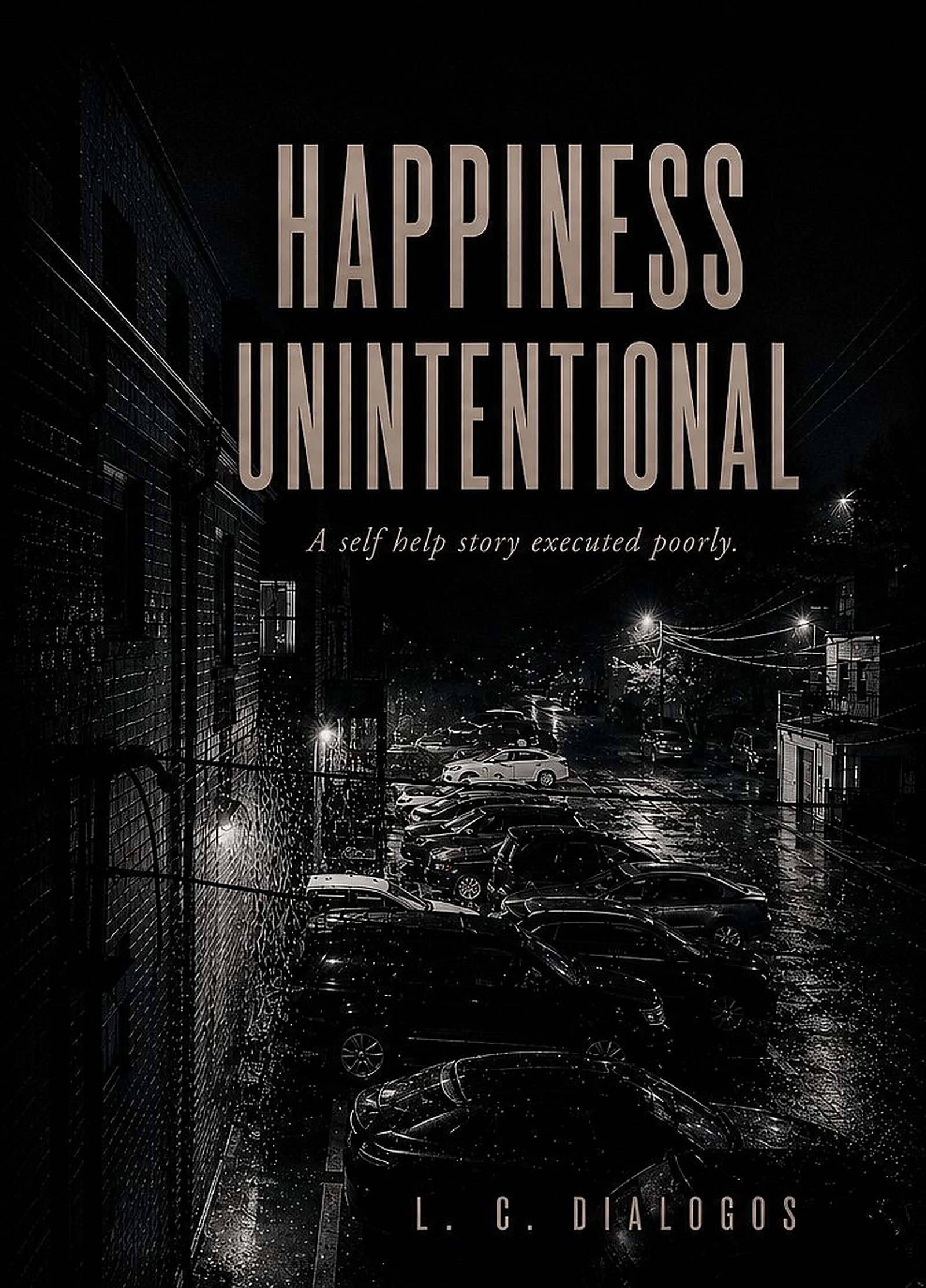
New writing on neurodivergent experience and dark fiction, with news about the book.
What the client from the opening of this piece needed was to stop treating a story she wasn't even in the room for as a referendum on who she actually is, and to treat it as what it was: an origin myth, written by people who needed a villain in order to be the protagonist of their own account.
The client described in this piece is an illustrative composite, not an account of any specific individual. This article is for educational purposes only and is not a diagnostic tool.
Explore Topics
Watch: related video
Curious about your own profile?
Related Posts
Writing the Villain: How Families Narrate a Cutoff Using the Person They Excluded
"You Only Worry About Me When It's Convenient": Ableism as a Weapon
Flying Monkeys and the Smear Campaign: Recognizing the Architecture of Narcissistic Abuse
Telehealth available across thirteen states.
Well wishes. 🙏
L.C. Dialogos Buddhist chaplain © LC Publishing Company.
<small class="text-muted-foreground">Content on this site is for educational and informational purposes only and does not constitute medical advice, diagnosis, or treatment. Nothing here creates a therapist–client relationship. If you are in crisis, call or text 988 (Suicide & Crisis Lifeline) or go to your nearest emergency room.</small>
Explore Topics
Written by
L. C. Dialogos
L. C. Dialogos writes dark psychological fiction exploring identity crisis, emotional numbness, and the anxiety of performing a self you're no longer sure exists. Influenced by Cronenberg, Lynch, and interdisciplinary frameworks spanning anthropology, neurology, and experimental literature. About the author →